
Shower Panel Wall Maintenance Tips for Cardiff Residents
Learn simple and effective shower panel wall maintenance tips that help Cardiff homeowners protect their bathroom panels and extend their lifespan.

Cardiff homes face a specific set of challenges when it comes to bathroom upkeep. The city sits in one of the wetter corners of Wales, and that persistent humidity, combined with hard water in parts of the city, creates the ideal conditions for limescale, mould, and grout deterioration.
If you have shower panel walls fitted in your bathroom, you are in a far better position than those still dealing with tiled surfaces. But even the best shower panels need a degree of care to stay looking sharp and performing well for years.
This guide covers everything Cardiff residents need to know about shower panel wall maintenance, from weekly cleaning habits through to long-term care, seasonal checks, and knowing when a panel needs replacing.
Why Shower Panel Walls Are Popular in Cardiff Bathrooms
Over the past decade, shower panels have replaced traditional tiles in a significant number of Cardiff bathrooms. The reasons are practical. Tiled showers require regular re-grouting, and grout is notoriously difficult to keep clean in humid conditions.
Panel systems, whether acrylic, PVC, or composite stone effect boards, offer a seamless surface with no grout lines for mould and bacteria to colonise. Cardiff’s older Victorian and Edwardian terraces in areas like Pontcanna, Roath, and Canton tend to have small, poorly ventilated bathrooms.
Shower panels are a sensible fit here because they install quickly, add a clean modern look, and are genuinely low maintenance compared to tile. Newer builds in Cardiff Bay, Pontprennau, and St Mellons often come with panel systems already fitted as standard.
The panel market has also expanded considerably. Homeowners can now choose from high-gloss acrylic, waterproof PVC, marble effect composite boards, and even glass shower panels. Each material has slightly different maintenance requirements, and knowing what you have fitted is the starting point for looking after it properly.
Understanding Your Shower Panel Material
Before you settle on a cleaning or maintenance routine, identify what type of panels you have. The material determines which products are safe to use and what kind of damage to watch out for.
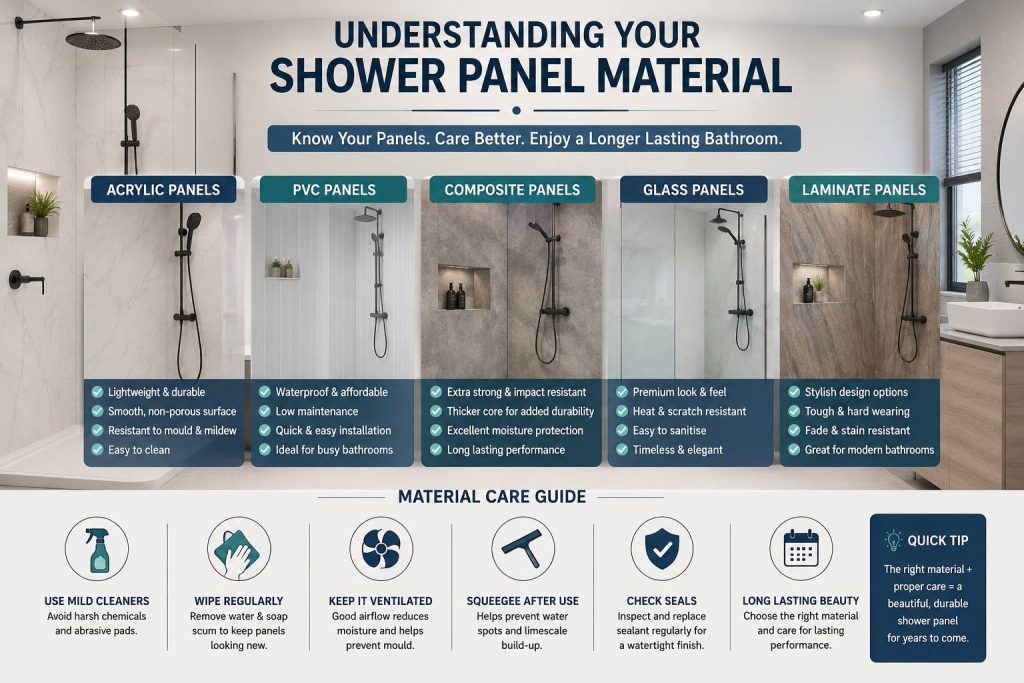
Acrylic Shower Panels
Acrylic is lightweight, available in a wide range of colours and finishes, and relatively easy to repair if scratched. It is one of the most common panel materials in UK bathrooms. The surface is smooth and non-porous, which makes it resistant to mould, but it can scratch if you use abrasive cloths or scouring pads. High-gloss acrylic shows water marks more readily than matte finishes, so it benefits from regular wiping after use.
PVC Shower Panels
PVC panels are the most affordable option and extremely water resistant. They are lightweight and straightforward to fit, making them popular in Cardiff rental properties and budget renovations. PVC is soft compared to acrylic or composite, so it dents more easily and can yellow over time if exposed to strong sunlight or harsh cleaning chemicals. Stick to gentle, pH-neutral products on PVC.
Marble Effect and Stone Look Composite Panels
These panels mimic the appearance of natural stone but without the maintenance demands of real marble. They tend to be made from MDF or acrylic cores with a high-resolution printed surface and a protective coating. While the surface is tough, the edges and joins need careful attention because water ingress at these points can cause swelling if the panel is not sealed properly.
Glass Shower Panels
Glass panels are a premium choice and add a genuinely luxurious feel to a Cardiff bathroom. Toughened safety glass is used in all reputable products. Glass shows limescale and soap scum very clearly, particularly in Cardiff areas where water hardness is moderate. The upside is that glass can handle stronger cleaning products than acrylic or PVC, and a proper water repellent treatment can dramatically reduce how often you need to clean it.
Related: What Is a Shower Access Panel and Why Is It Important?
Cardiff Water Quality and Its Effect on Shower Panels
Water hardness varies across Cardiff. Parts of the city draw water that carries a moderate mineral load, and over time calcium and magnesium deposits accumulate on shower surfaces. This shows up as a white, chalky film on panels, shower heads, and taps.
While Cardiff’s water is not as hard as in parts of South East England, the deposits are still enough to cause visible limescale build-up if panels are not dried or treated regularly. The good news is that panel surfaces, being non-porous, do not absorb minerals the way natural stone or grout does. The deposits sit on the surface and are relatively straightforward to remove with the right approach.
If you live in Llandaff, Whitchurch, or Rhiwbina, areas where water can be slightly harder, you may find you need to descale your panels a little more frequently than residents in other parts of the city.
Daily Shower Panel Wall Maintenance Habits
The single most effective maintenance habit costs nothing and takes under a minute. After every shower, take a squeegee or a dry microfibre cloth and wipe down the panels. This removes water droplets before they evaporate and leave mineral deposits behind. It also removes soap residue, which is the main food source for mould and bacteria in a damp bathroom.
Leave the shower door or curtain open after use to allow air to circulate. If your Cardiff bathroom has an extractor fan, run it during your shower and for ten to fifteen minutes afterwards. This significantly reduces the ambient humidity that encourages mould growth along panel edges and in bathroom corners.
These two habits, wiping down and ventilating, will reduce how often you need to do a deeper clean by a considerable margin.
Related: Best Acrylic Shower Panels UK sizes, finishes and price comparison
Weekly Cleaning Routine for Shower Panel Walls
A weekly clean keeps panels looking fresh and prevents build-up from becoming a scrubbing job.
For acrylic and PVC panels, a spray of diluted washing up liquid or a dedicated bathroom spray followed by a wipe with a soft microfibre cloth is sufficient for most weeks. Work from top to bottom so that any loosened residue runs down to the shower tray rather than being spread back over already cleaned areas. Rinse with warm water and dry with a clean cloth.
For glass panels, a glass-specific cleaner or a diluted white vinegar solution works well. Spray on, leave for a minute or two, and then wipe off with a lint-free cloth. Avoid paper towels on glass as they can leave fibres behind.
For composite marble-effect panels, a pH-neutral bathroom cleaner is the safest choice. Avoid anything acidic or heavily alkaline as these can dull the printed surface finish over time.
Do not use bleach directly on panel surfaces as a routine cleaner. It is not needed for general cleaning and can cause discolouration on certain materials, particularly PVC. If you are dealing with mould, a targeted approach is better than blanket bleach application.
Related: How Waterproof Shower Panels Reduce Bathroom Maintenance
Tackling Limescale on Cardiff Shower Panels
Limescale requires an acidic solution to dissolve the calcium carbonate deposits. The safest and most cost-effective option for most panel types is white vinegar. Mix equal parts white vinegar and warm water in a spray bottle, apply to the affected area, and leave it to work for five to ten minutes before wiping off.
For stubborn deposits, you can apply undiluted white vinegar or use a dedicated limescale remover. Always check the product is suitable for your panel material before applying. Most mainstream limescale removers are fine on glass and acrylic but should be used cautiously on PVC and composite panels.
Avoid using sharp implements or metal scrapers to remove limescale from any panel surface. Even if the deposit feels rock solid, mechanical scraping will scratch the surface, creating microscopic grooves where future deposits and bacteria can cling more easily.
After descaling, rinse the panels thoroughly and dry them. Applying a thin coat of car wax or a dedicated shower glass treatment to acrylic or glass panels after descaling creates a hydrophobic barrier that slows future deposit build-up considerably.
Related: Shower Panels Wall Maintenance Tips to Keep Bathroom Looking New
Dealing With Mould Around Shower Panel Edges
Mould most commonly appears along the silicone sealant lines at the base of panels, in the corners where two panels meet, and along the join between the shower tray and the bottom panel edge. It rarely grows on the face of a panel itself because the surface dries between uses. It is the edges and sealed joins where moisture lingers.
For early-stage mould on silicone sealant, a targeted mould and mildew spray left on for fifteen to twenty minutes before rinsing will often do the job. Apply the product, cover with cling film to stop it drying out before it has worked, then remove and rinse off.
If the silicone is heavily stained or has deteriorated, the best solution is to remove the old sealant entirely and re-apply fresh silicone. Old silicone hardens and can begin to pull away from surfaces, creating gaps where water gets behind the panels. In Cardiff bathrooms that see heavy daily use, it is worth budgeting to re-seal shower panel edges every two to three years as a preventive measure.
When replacing silicone, use a product that contains a fungicide. These are widely available at DIY stores and will extend the time before mould returns. Apply with a steady hand or use a sealant tool to get a neat finish, and allow the full cure time (usually twenty-four hours minimum) before running the shower again.
Related: How to Clean and Maintain Shower Wall Panels
Seasonal Maintenance Checks for Shower Panels in Cardiff
Beyond your weekly clean, a more thorough inspection twice a year keeps you ahead of problems before they become expensive repairs.
Spring Check
After a Cardiff winter with its damp conditions, spring is the right time to inspect all silicone sealant lines for signs of cracking, darkening, or separation from the panel surface. Check the joins between panels carefully and look for any slight lifting at the edges, which can indicate water has found its way behind.
Press gently along the panel edges to check they are still firmly adhered. If any panels feel loose or produce a hollow sound when tapped, the adhesive or fixing system behind may need attention.
Autumn Check
Before the wetter, colder months arrive, carry out the same visual and physical checks. Pay particular attention to the extractor fan. Cardiff bathrooms that are poorly ventilated through autumn and winter tend to accumulate more condensation, which accelerates mould growth around seals and fittings. Clean or replace the extractor fan filter if it is blocked, and make sure the fan is actually drawing air out effectively.
Protecting Shower Panels Long Term
Applying a protective treatment to your shower panels is one of the best long-term investments you can make in their appearance and longevity.
For glass shower panels, a nano-coating or hydrophobic glass treatment repels water and reduces soap scum adhesion by a significant margin. These treatments bond to the glass surface and can last anywhere from six months to two years depending on the product and how frequently the shower is used.
Application is straightforward: clean the panel thoroughly, apply the treatment with a cloth, buff off, and allow to cure. For acrylic panels, a thin coat of carnauba car wax achieves a similar effect and is far cheaper than specialist products.
Apply, buff gently with a soft cloth, and the surface becomes noticeably more water-repellent. Avoid waxing the shower tray floor as this creates a slip hazard. For PVC panels, there are specific PVC care products available, though many Cardiff homeowners find that a regular wipe with a damp microfibre cloth and occasional application of a product like Flash or Method bathroom spray is sufficient without any additional treatment.
Avoiding Common Damage Mistakes
Most damage to shower panels in Cardiff homes comes not from the water itself but from the products and tools people use to clean them.
Abrasive sponges and scouring pads scratch acrylic and PVC surfaces badly. Once scratched, the surface loses its shine, becomes harder to clean because dirt clings to the micro-scratches, and looks far older than it is. Stick to soft microfibre cloths for all panel types.
Bleach-based cleaners used regularly on PVC panels cause yellowing over time. If you want to use a bleach product for mould removal, apply it sparingly and only to the affected silicone rather than spraying it across the whole panel face.
Pressure washers should never be used on shower panels. The force can dislodge adhesive fixings and drive water behind the panels, leading to damp problems in the wall behind. Bathroom panel cleaning should always be gentle and manual.
Heavy impacts from shower accessories, bottles, or razor holders falling and hitting the panels can crack or chip acrylic and composite boards. Wall-mounted holders that fix with proper suction cups or command strips rather than hanging directly off the panel edge put less stress on the panel surface.
Repair Options for Damaged Shower Panels
Even well-maintained panels occasionally need minor repairs.
Small Scratches on Acrylic Panels
Light scratches on acrylic can often be polished out using a dedicated acrylic polish or even a car headlight restoration kit. Apply in small circular motions with a soft cloth, building up gradually. Deep scratches that catch a fingernail cannot be fully removed but can be reduced in visibility with filler polish products.
Chips and Cracks
Small chips on the face of composite or acrylic panels can be filled using a colour-matched repair kit. These are available online or from bathroom suppliers and are designed for this purpose. The result is rarely invisible but significantly better than leaving a sharp-edged chip exposed.
Cracks that run fully through a panel, or damage close to the edge of the panel where water could get behind, are more serious. In these cases, the panel will likely need replacing. A cracked panel that is not addressed quickly can allow water to reach the wall behind, leading to damp, mould, and structural issues that cost considerably more to fix.
Yellowed PVC Panels
Yellow discolouration on PVC panels caused by UV exposure or chemical damage is very difficult to reverse. Restoration sprays marketed for plastic surfaces can improve the appearance modestly, but if the yellowing is significant and widespread, replacement is usually the more practical option.
PVC panels are among the cheaper panel types available, so replacement is not necessarily a major expense.
When to Call a Professional in Cardiff
Most shower panel wall maintenance is genuinely manageable as a DIY task. However, there are situations where calling a professional is the right call.
If panels are coming away from the wall, feel soft or spongy when pressed, or if there is visible staining on the wall outside the shower area suggesting water has penetrated, you need a professional assessment. Water damage behind shower panels can affect plasterboard, timber stud work, and even flooring, and the longer it is left, the more expensive the repair becomes.
Re-sealing a shower is a job many Cardiff homeowners tackle successfully themselves, but if you are not confident with a sealant gun or the area to be sealed is particularly complex, such as a corner shower with multiple joins, a professional bathroom fitter will do the job more cleanly and quickly than most DIY attempts.
Cardiff has a good range of local bathroom fitters and tile and panel specialists, particularly around the Canton, Cardiff Bay, and Llanishen areas.
When looking for a tradesperson, check they are registered with a trade body such as the Guild of Master Craftsmen or that they carry public liability insurance. Always get at least two quotes before proceeding with any significant repair work.
Upgrading Your Shower Panel Walls
If your current panels are looking dated, heavily stained, or have reached the end of their useful life, upgrading is a straightforward project compared to re-tiling. Panel systems can often be fitted over existing tiles in good condition, which saves considerable time and labour cost.
When choosing replacement panels, it is worth investing a little more in a quality product that comes with a longer manufacturer warranty. Many budget PVC panels are guaranteed for five years, while mid-range acrylic and composite panels carry ten-year guarantees, and premium glass panel systems can be guaranteed for twenty-five years or more.
Suppliers offering a strong range of waterproof wall panels, including marble effect and stone look options suitable for Cardiff bathrooms, include Floors to Walls, which stocks a broad selection of bathroom wall panel options suitable for both full bathroom renovations and like-for-like replacements in existing shower enclosures.
Ventilation: The Most Underrated Factor in Panel Longevity
No amount of cleaning product will compensate for inadequate ventilation. A poorly ventilated Cardiff bathroom will develop mould on silicone seals, grout (if any remains from original tiling), and around fixtures regardless of how diligently the panels are cleaned.
Building regulations require mechanical ventilation in bathrooms without openable external windows. Even if your bathroom has a window, running an extractor fan is strongly advisable during and after showering. Fans lose efficiency over time as their filters and motors accumulate dust and grease.
A bathroom fan that runs constantly but moves little air is common in older Cardiff properties and should be tested with a tissue held near the fan grille. If the tissue is not drawn to the grille, the fan is not doing its job.
Replacing a bathroom extractor fan is an inexpensive job that significantly improves bathroom conditions. Fans with a humidity sensor are particularly useful as they run automatically when moisture levels rise and switch off once the room has dried out, removing the need to remember to turn them on or off manually.
Frequently Asked Questions About Shower Panel Wall Maintenance in Cardiff
How often should I deep clean my shower panels?
A thorough clean once a week combined with a daily wipe-down after use is sufficient for most Cardiff bathrooms. If the shower is used heavily by multiple people each day, a mid-week clean as well will keep on top of soap and limescale build-up.
Can I use a steam cleaner on shower panels?
Steam cleaners can be used on glass and some acrylic panels but should be used with caution. Very high temperatures can soften the adhesive behind panel systems and may damage PVC panels. Check the manufacturer’s guidance for your specific panels before using steam. For most routine cleaning tasks, warm water and a microfibre cloth produce equally good results without the risk.
How do I prevent mould from coming back on my silicone sealant?
Keep the shower well ventilated, wipe panels dry after use, and use a fungicidal sealant when re-sealing. Some Cardiff homeowners apply a light spray of diluted tea tree oil solution to sealant lines weekly as a natural antifungal measure, though the evidence for its long-term effectiveness compared to commercial products is mixed.
My panels have gone slightly yellow near the top. What is causing this?
Yellowing near light fittings or on panels that receive direct sunlight through a window is typically UV degradation, particularly common on PVC panels. Yellowing lower down or around the showerhead is more likely caused by iron deposits in the water, or by the residue from certain shampoos and body wash products. Anti-limescale sprays will help with mineral deposits. UV yellowing is more difficult to reverse.
How long do shower wall panels last?
Well-maintained acrylic and composite panels last fifteen to twenty years or more. PVC panels typically last around ten years before showing signs of age. Glass shower panels have an almost indefinite lifespan if handled carefully, with the sealant and fixings being the elements that require periodic replacement rather than the glass itself.
Is it better to have shower panels or tiles in a Cardiff bathroom?
For low-maintenance bathrooms, panels are generally easier to keep clean than tiles because there are no grout lines. Tiles, when properly installed with quality grout and sealed correctly, can last longer and offer more design flexibility. For Cardiff homeowners who want a bathroom that is easy to maintain with minimal time investment, panels are typically the better choice.
Can shower panels be fitted in a Cardiff bathroom as a DIY project?
Many panel systems are designed to be DIY-friendly and come with full installation instructions. PVC tongue-and-groove panels are particularly straightforward to install. Acrylic and glass systems can require more precision and are better suited to those with some DIY experience. The critical step in any panel installation is getting the adhesive bonding and silicone sealing right, as this determines how waterproof the finished installation will be.
Summary: Keeping Your Cardiff Shower Panels in Top Condition
Shower panel wall maintenance in Cardiff does not need to be complicated or time-consuming. The fundamentals are straightforward: wipe panels down after each use, clean weekly with suitable products for your panel type, keep ventilation working properly, and check sealant lines twice a year. Address limescale with a gentle acidic solution before it builds up into a stubborn problem, and replace silicone every two to three years to keep edges watertight.
Cardiff’s wet climate and moderate water hardness make these habits especially worthwhile. Panels that receive this basic level of attention will look good and perform well for many years, making them one of the best investments you can make in a Cardiff bathroom renovation.


